Tips for New Parents: Foods to Avoid Before Your Baby's First Birthday
This guide covers foods that can trigger allergies and are hard to digest when introducing solid foods before your baby's first birthday. It provides guidance on the proper intake and precautions for nuts, peaches, shellfish, and fatty meats.
Last updated June 25, 2026
Guide content
Tips for New Parents on Baby Food Part 2: Foods to Avoid Before the First Birthday
As we start introducing solid foods to our baby, we can't just feed them anything, right? Before their first birthday, we need to be especially careful about foods that could affect their immature digestive systems and potential allergic reactions. Baby Pastel is here to guide you.
1. Nuts & Peaches
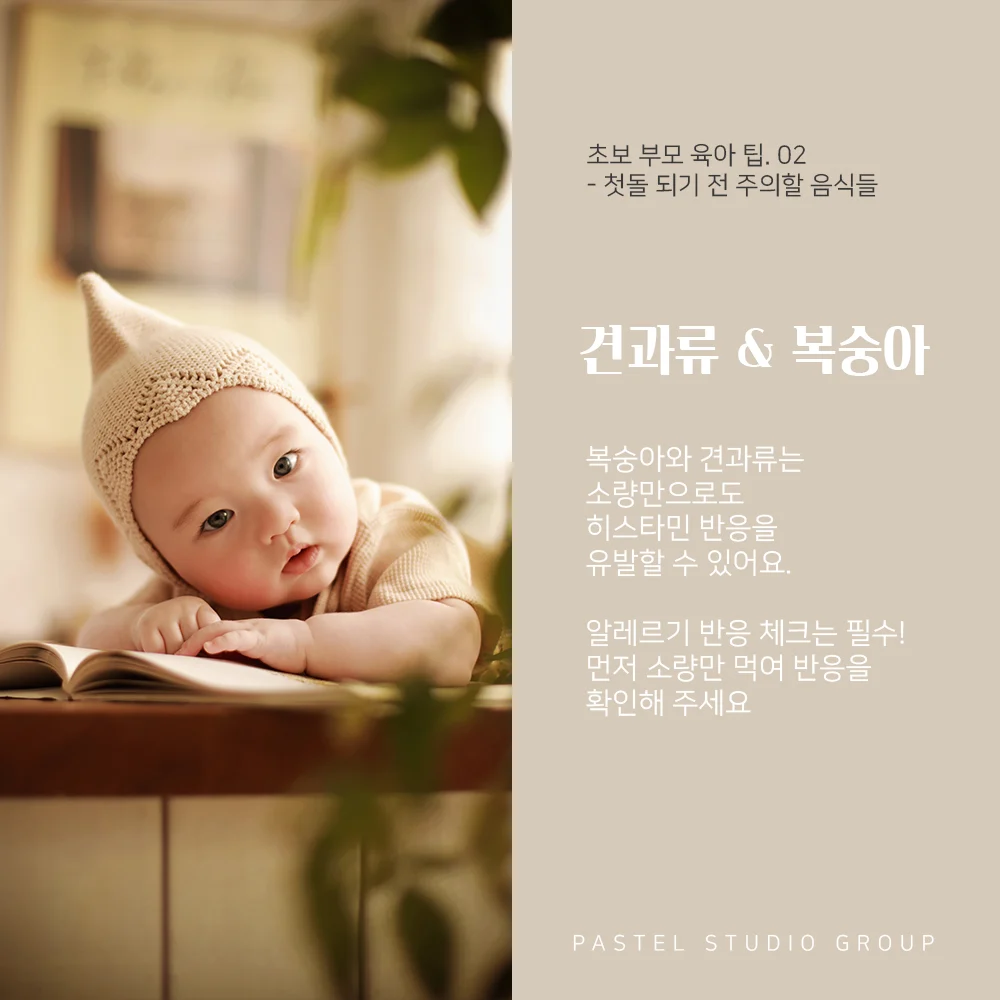
Peaches and nuts are common allergens that can trigger histamine reactions even in small amounts. It's essential to check for allergic reactions! When introducing these foods for the first time, start with a very small amount and be sure to monitor for any skin rashes or unusual reactions.
2. Sardines & Shellfish
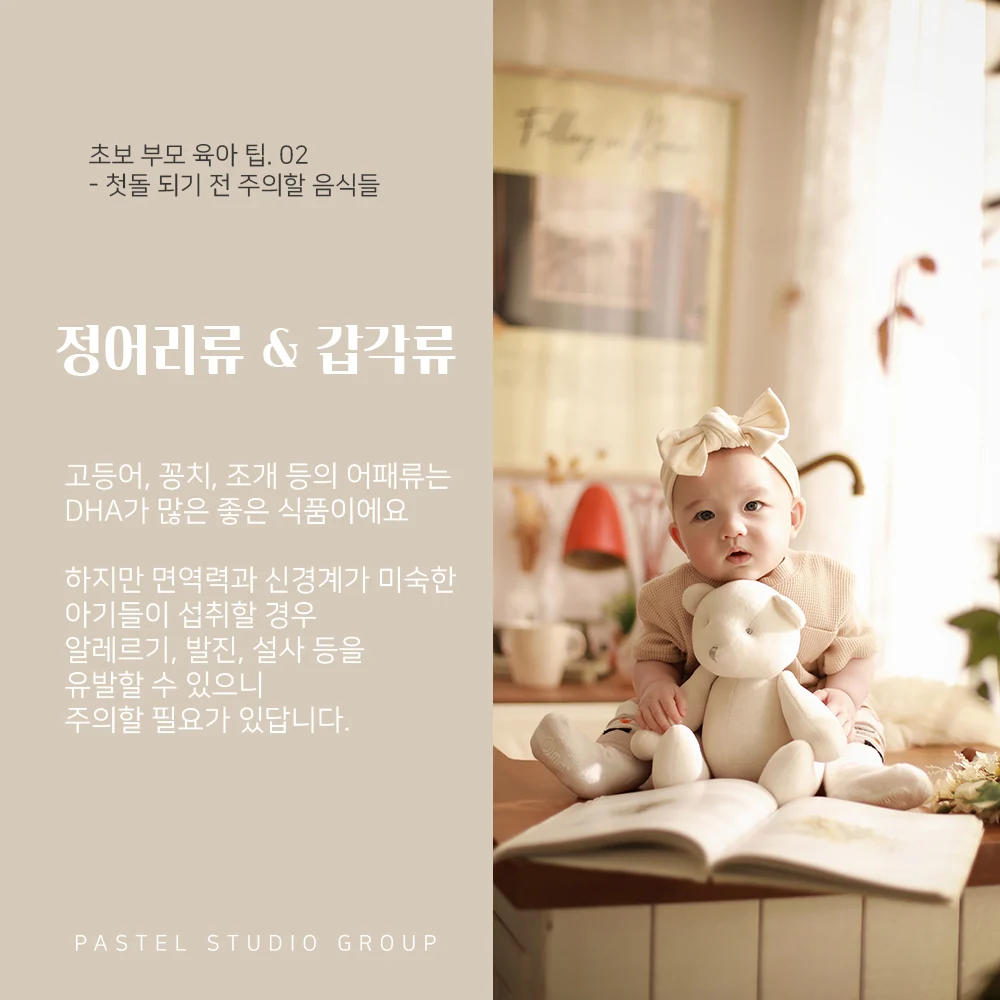
Fish like mackerel, saury, and shellfish are great sources of DHA. However, babies under one year old, whose immune systems and nervous systems are still developing, may experience allergies, rashes, or diarrhea from these foods, so caution is advised.
3. Chicken & Pork
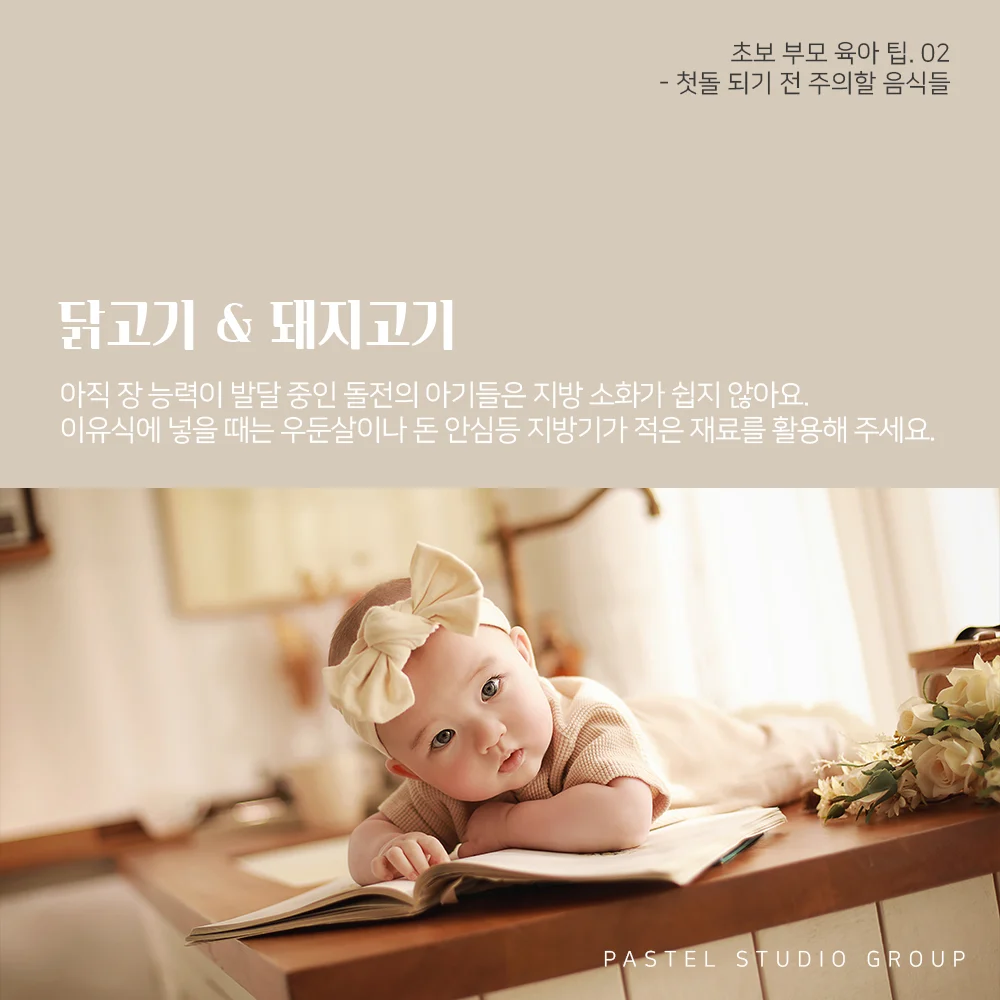
Babies under one year old are still developing their digestive abilities, making it difficult for them to digest fats. Therefore, when adding meat to their solid foods, focus on lean cuts like beef round or pork tenderloin, which are low in fat and high in protein.
Checklist
- Feed only a very small amount of peaches and nuts to check for allergic reactions
- Be cautious with fish like mackerel and saury before one year old due to weak immunity
- When using chicken and pork in baby food, remove fat and focus on lean cuts like tenderloin
- When introducing new ingredients, space them out by a few days and check the child's skin and bowel reactions
Frequently asked questions
What should I do if my baby shows signs of a food allergy?
If you notice redness around the mouth, hives, vomiting, or diarrhea, you should immediately stop giving that food. If your baby has difficulty breathing or if symptoms spread throughout the body, seek immediate medical attention from a pediatric specialist.
Can I freely give my baby seafood after their first birthday?
Just because your baby has turned one does not mean all seafood is safe. It's best to start slowly with white fish that have a low allergy potential and gradually increase the variety. Shellfish (shrimp, crab, etc.) and mollusks are more likely to cause allergies, so it's recommended to introduce them slowly and in small amounts.