Brain Development by Age: 4-6 Months, Recognizing Mom's Voice!
This section introduces the sensory, cognitive, emotional, social, and language development characteristics of babies aged 4 to 6 months. Discover the key points of our baby's brain development, such as responding to mom's voice and engaging in cooing, along with tailored sensory stimulation tips at Baby Pastel.
Last updated June 25, 2026

Guide content
Monthly Brain Development Guide VOL.2: 4-6 Months, Recognizing Mom's Voice!
Our baby is growing rapidly every day! At Baby Pastel, we summarize the key brain development points for babies aged 4-6 months. Understanding your child's developmental characteristics by age will help you provide the necessary sensory stimulation and tailored checks during this crucial period.
1. Sensory and Cognitive Development
At this stage, babies will grab objects and bring them to their mouths to explore. Their vision is also developing, allowing them to distinguish objects at a distance and start recognizing colors. They are particularly sensitive to the familiar and comforting voice of their mother.
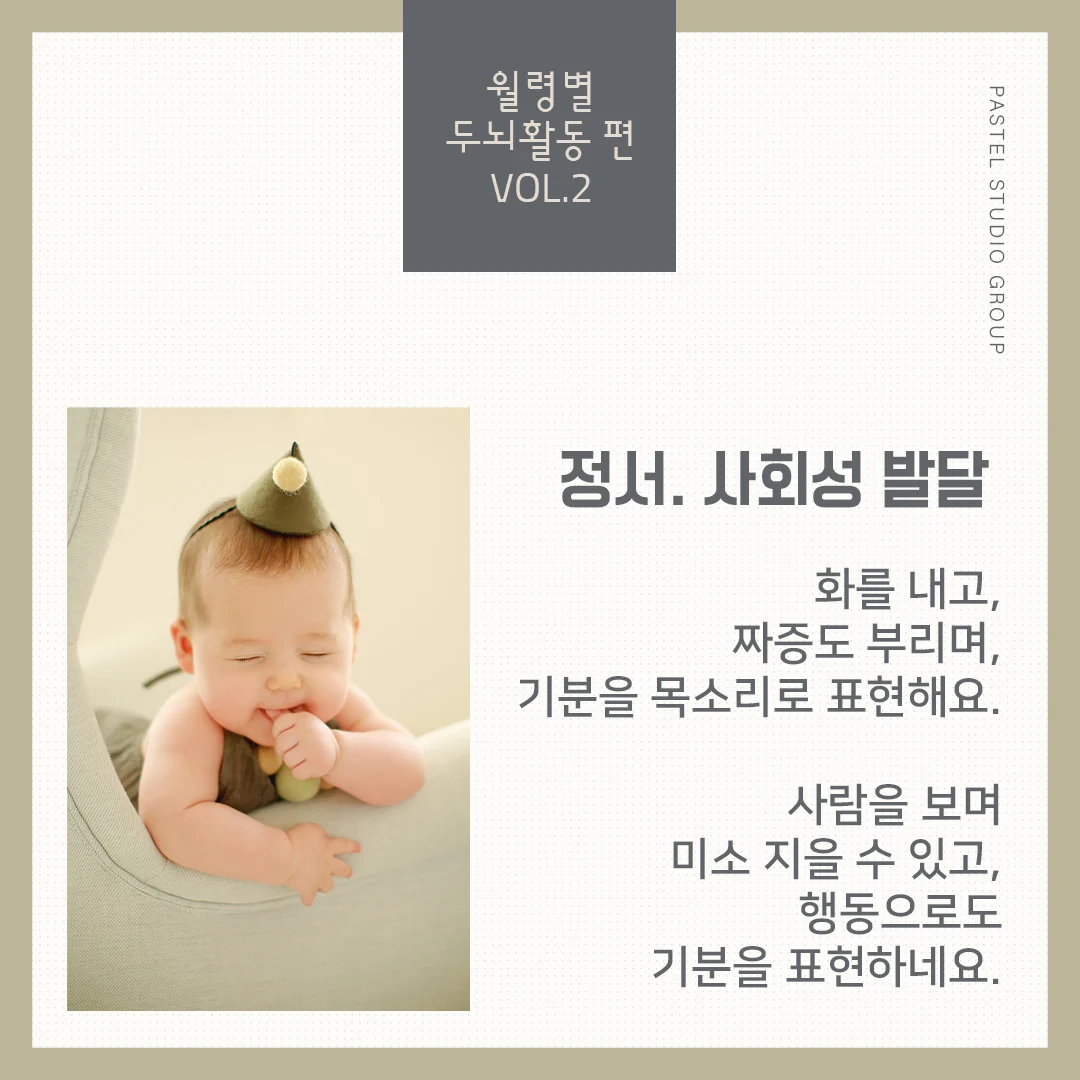
2. Emotional and Social Development
Emotional expression becomes much richer. Babies can express anger and frustration, actively communicating their feelings through their voices. They may smile at people and express their emotions through gestures and actions during this adorable stage.
3. Language Development
Babbling skills improve significantly. Babies begin to respond to their names and can produce various vowel sounds. Sometimes, they even engage in a back-and-forth babbling conversation with their mothers. Responding kindly to your baby's babbling will further enhance their language development.
[Don’t Forget!]
Understanding your child's brain development according to their age allows you to provide the necessary sensory stimulation and tailored developmental checks.
* For premature babies, developmental checks should be based on the 'corrected age' according to their due date, not their birth date.
Checklist
- Observe if the baby actively explores objects by bringing them to their mouth.
- Check if the baby turns their head or responds sensitively to the sound of their mother's voice.
- Observe if the baby expresses various emotions such as frustration and laughter through voice and actions.
- Check if the baby reacts when their name is called, such as looking in that direction.
- Engage actively by making eye contact with the baby's babbling and responding warmly.
Frequently asked questions
Is it okay for my baby to bring everything they can grab to their mouth?
Yes, this is a very natural phenomenon. Babies aged 4-6 months go through the 'oral stage' where they explore and recognize objects through their mouths and lips. Please remove any dangerous or small objects that could be swallowed, and ensure that teething toys or other toys that the baby bites are always kept clean and sanitized.
How should I engage in babbling with my baby?
When your baby makes sounds, make eye contact and respond with a bright, warm tone, saying things like "Really?" or "Our baby is feeling good!" This interaction greatly helps with your baby's language development as well as emotional stability and bonding.