Brain Development by Age: 19-24 Months - Tailored Play for Your Two-Year-Old
From 19 to 24 months, your baby is rapidly growing towards their second birthday. This period is marked by significant sensory, cognitive, emotional, and language development. As their emotions become more nuanced and language comprehension improves, check out Baby Pastel's tailored play tips using smartphone voice recognition.
Last updated June 25, 2026
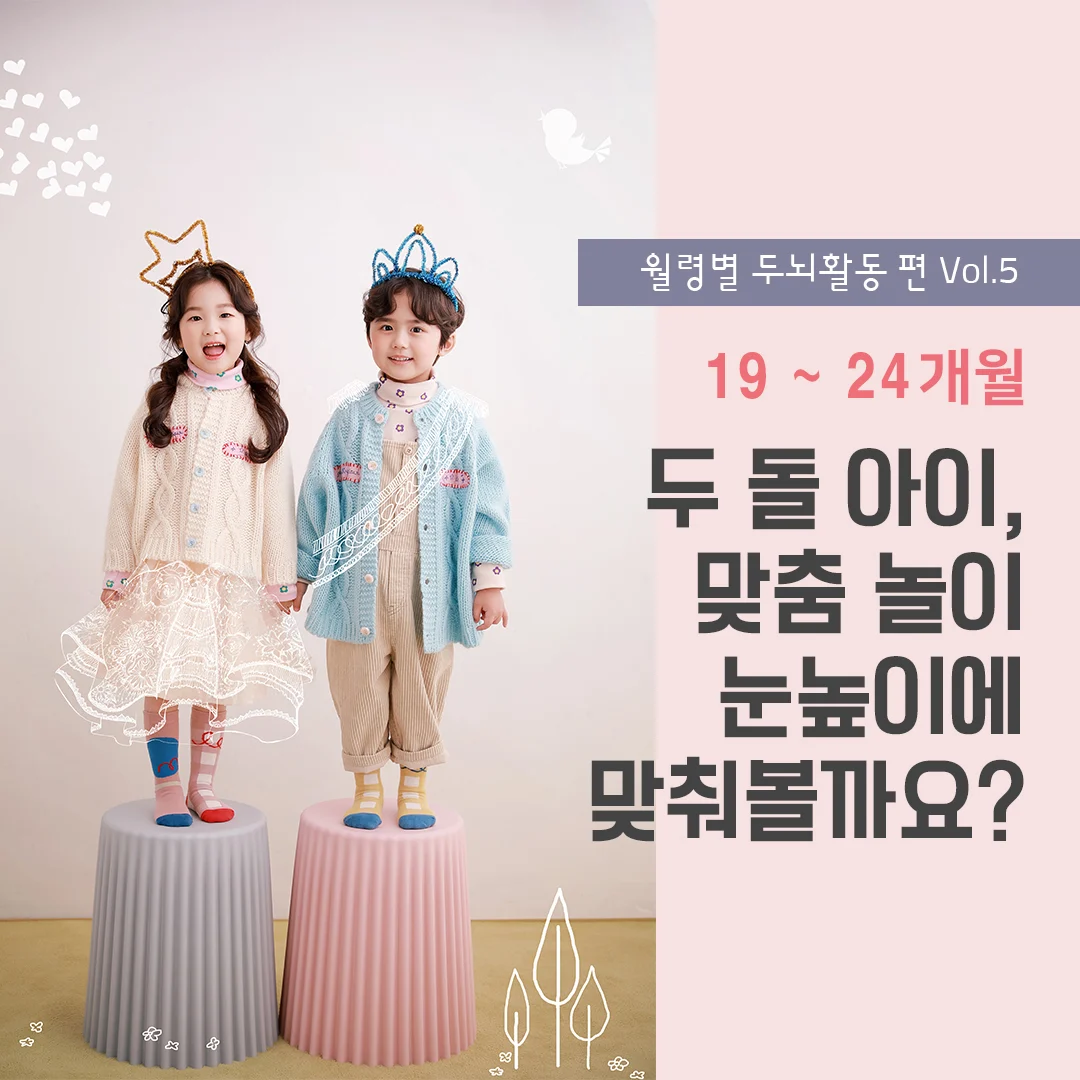
Guide content
Brain Activities by Age VOL.5: 19-24 Months - Let's Explore Customized Play for Our Two-Year-Old!
Our child is growing towards their second birthday at 19-24 months! During this period, cognitive and emotional development becomes notably complex. Baby Pastel shares suitable brain development points and play tips for this stage.
1. Sensory and Cognitive Development
Children can infer and find objects they cannot see being hidden, and their cognitive abilities develop significantly to match objects with pictures correctly. They also learn to understand the principles of moving toys and can operate them correctly.
2. Emotional and Social Development
Emotions such as pride, joy, sympathy, embarrassment, shame, guilt, and jealousy become more differentiated. At this stage, children's emotional levels can become as deep and nuanced as adults, making parental empathy and warm responses crucial to nurturing their feelings.
3. Language Development
Children can accurately identify and touch 3-6 body parts and match animals with the sounds they make. They love listening to stories and gradually start connecting two words, using numbers, pronouns, and verbs, leading to explosive growth in their language abilities.
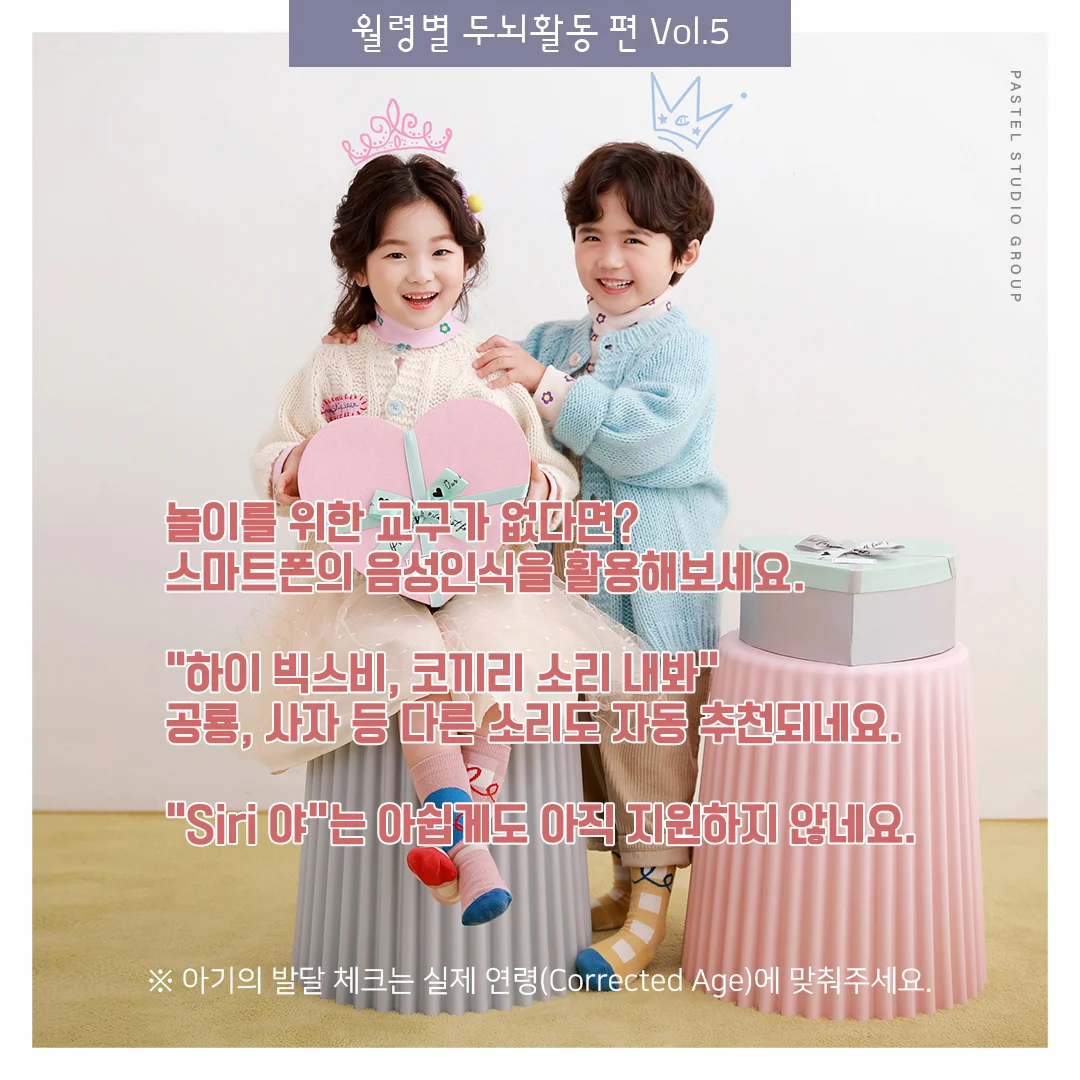
[Baby Pastel's Customized Play Tip: Utilizing Smartphone Voice Recognition]
If you want to play animal sounds but don’t have the toys at hand, make the most of your smartphone's voice recognition feature! Just say, "Hi Bixby, play elephant sound," and it will automatically suggest sounds of other animals like dinosaurs and lions, creating excellent auditory stimulation play. (Please note that the "Siri" feature is unfortunately not yet supported.)
* For premature babies, developmental checks should be based on the 'Corrected Age' according to the expected delivery date, not the actual birth date.
Checklist
- Help find hidden objects, match objects with pictures, and engage in cognitive play together.
- Encourage exploration and learning of how moving toys work.
- Acknowledge and gently empathize with the child's varied and complex emotions such as embarrassment, shame, and jealousy.
- Engage in active language stimulation play, such as naming body parts and reading books together.
- Use smartphone voice recognition to play various animal sounds and mimic them.
Frequently asked questions
Is it natural for my child to suddenly become shy and jealous?
Yes, it is a very natural phenomenon. Between 19-24 months, complex emotions such as pride, embarrassment, shame, guilt, and jealousy become finely differentiated, similar to adults. Rather than denying or scolding your child's feelings, acknowledging them with phrases like "My child is upset" or "They felt shy" greatly aids in healthy emotional development.
Does playing animal sounds help with language development?
The process of matching animals with their sounds provides visual and auditory stimulation to the brain, helping both cognitive and language development simultaneously. If you don’t have related books or toys, use your smartphone's voice recognition (like Bixby) to play vivid sounds and spark your child's interest.