Brain Development by Age: After 5 Years Old - "Mom, Do You Love Me? But Why Do You Keep Scolding Me?"
This section introduces the sensory, cognitive, emotional, and language development characteristics of children after 5 years old. During this period, children show interest in letters and numbers, can engage in structured play, and experience explosive vocabulary growth. As language skills develop, the role of parents becomes even more crucial. Check out Baby Pastel's tailored parenting guide for 5-year-old children.
Last updated June 25, 2026
Guide content
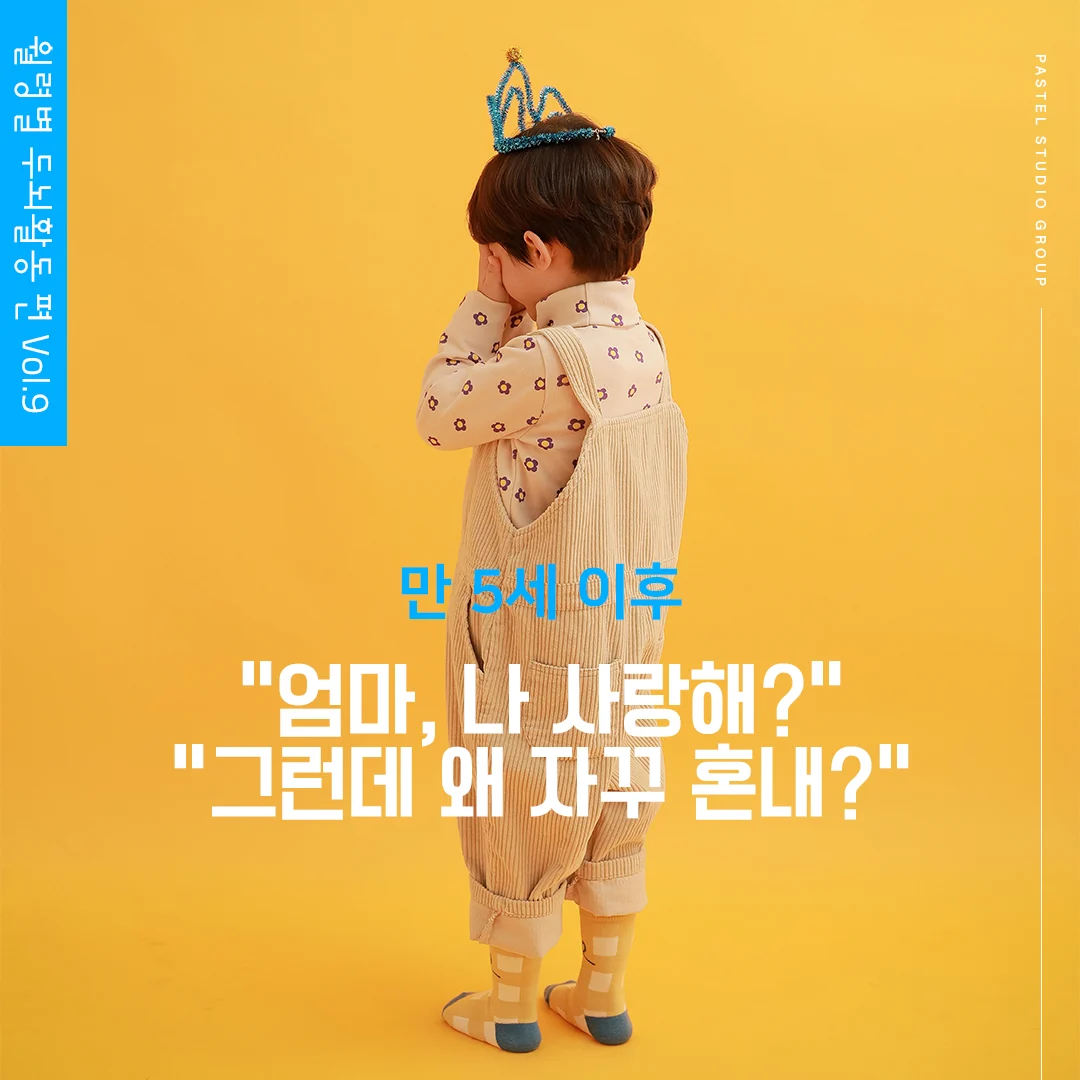
Monthly Brain Development Guide VOL.9: After Age 5 "Mom, do you love me? But why do you keep scolding me?"
Our child, who has grown both physically and emotionally after turning 5! They start to ask logical questions about their feelings and can play with friends while following rules. Baby Pastel guides you through the brain development points at this stage and the correct role of parents.
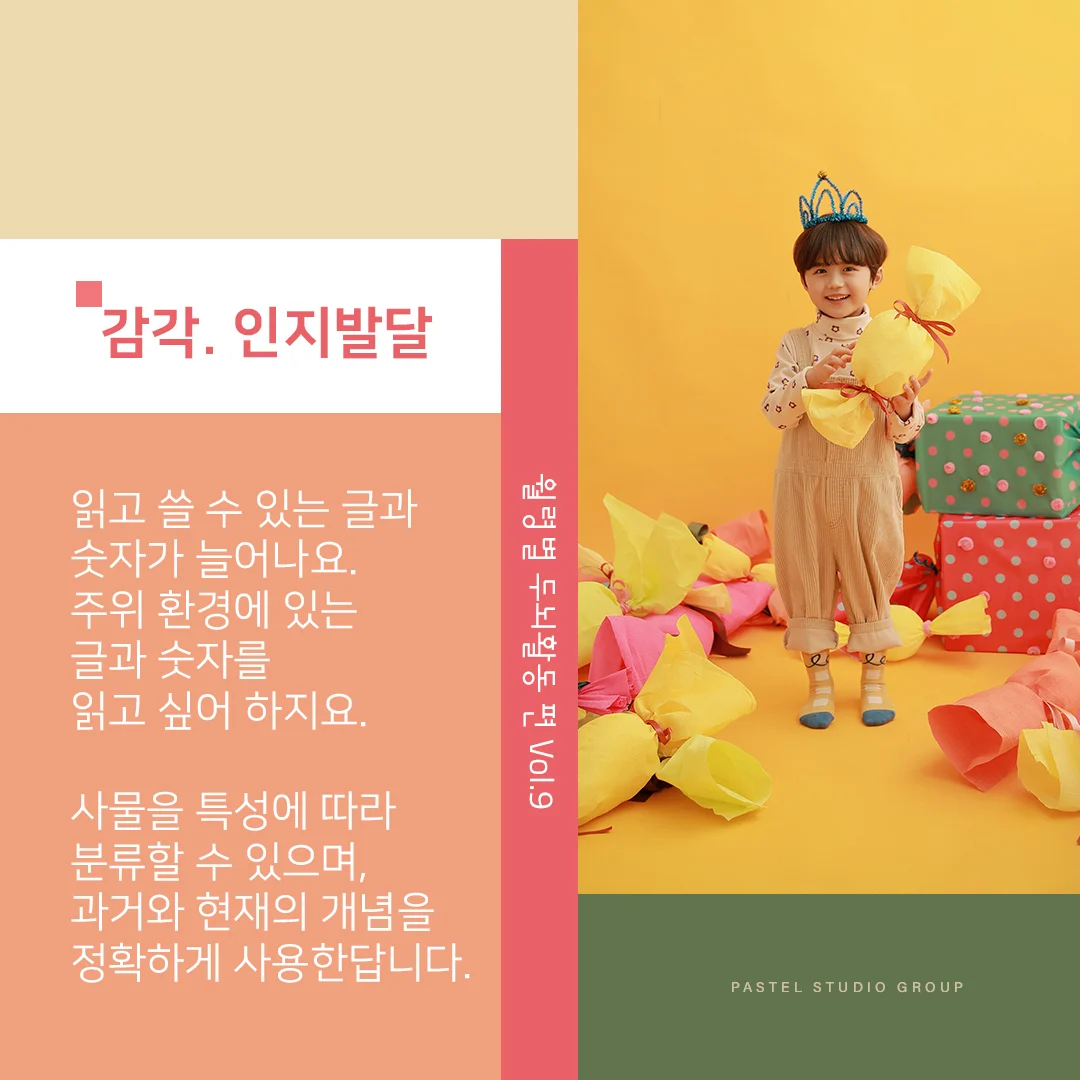
1. Sensory and Cognitive Development
The ability to read and write letters and numbers increases significantly. Curiosity grows as they want to read signs and books in their environment. They can classify objects by characteristics (color, shape, size, etc.) and understand and use concepts of the past and present, such as 'yesterday' and 'today'.
2. Emotional and Social Development
When they feel bad or upset, they can express their feelings verbally rather than just crying. They develop friendships with peers who share their interests and can enjoy games with rules, such as taking turns and cooperative play, indicating significant social development.
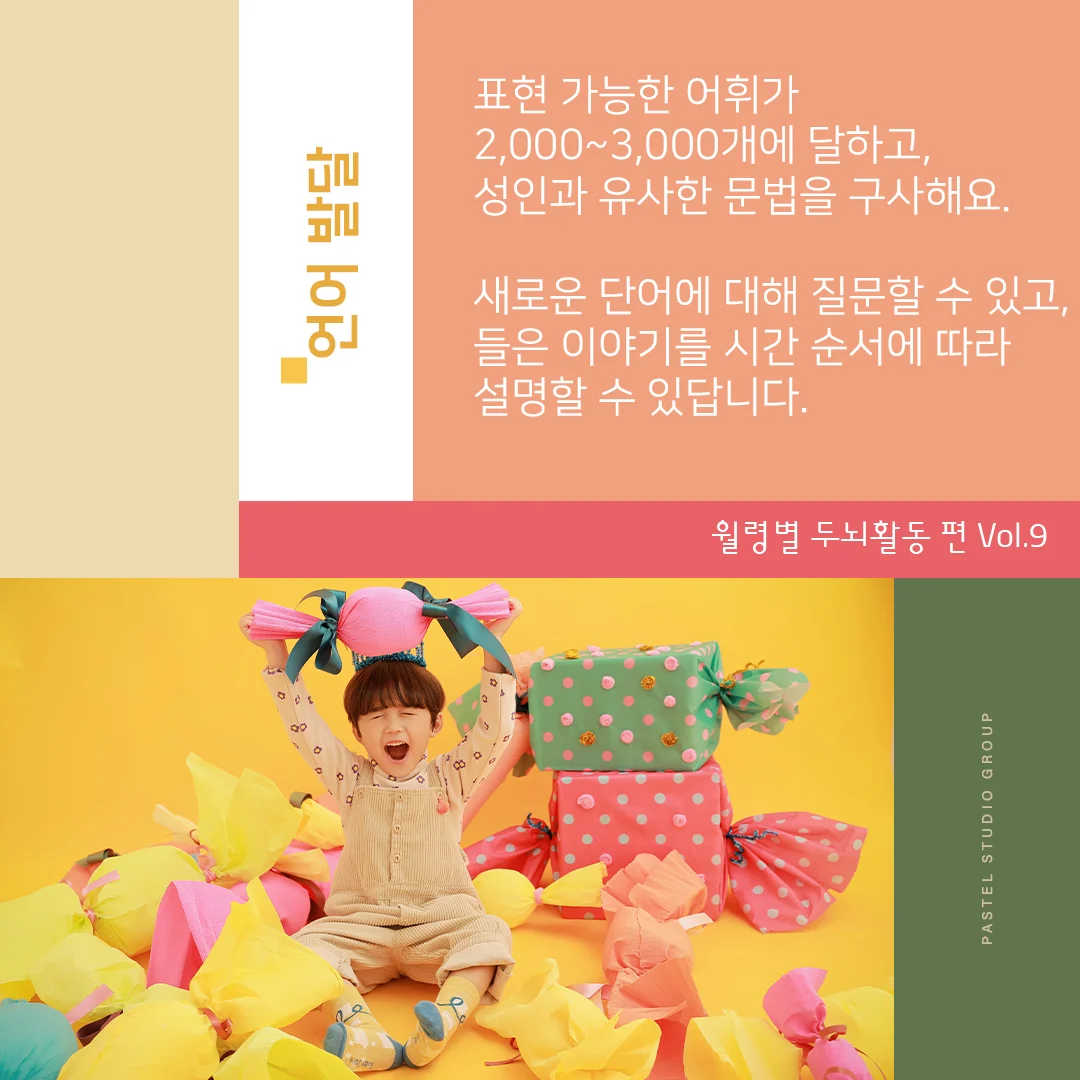
3. Language Development
The number of words they can express reaches an impressive 2,000 to 3,000, and they use grammar almost at an adult level. They can actively ask about new words they don’t know and can coherently explain experiences or stories in chronological order, showcasing remarkable language skills.
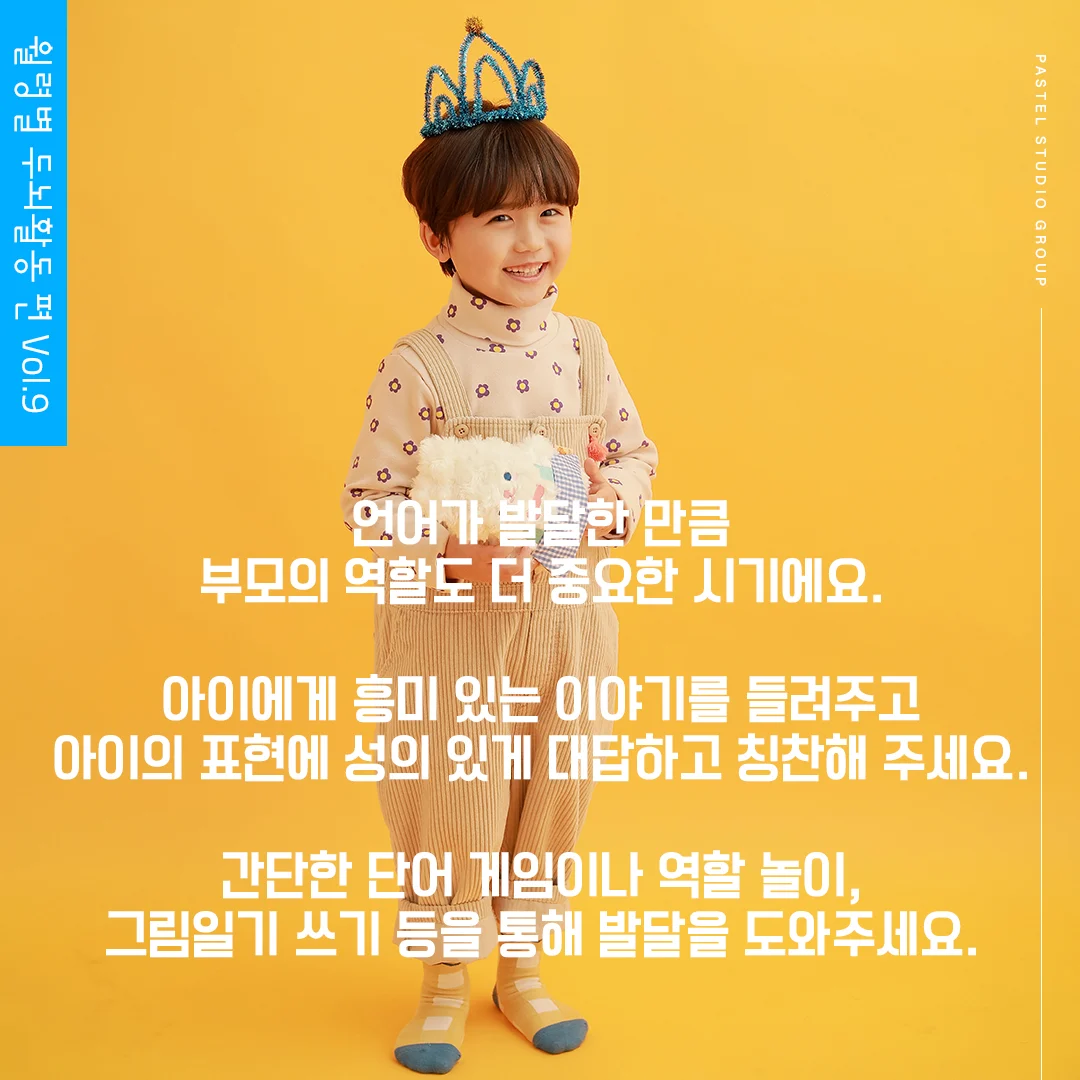
[As language develops, the role of parents becomes crucial!]
Share interesting stories with your child frequently, respond sincerely to their questions and expressions, and don’t hold back on praise. Engaging in simple word games like word chain, role-playing various scenarios, and writing a picture diary to reflect on the day can effectively support your child's brain and language development.
Checklist
- Praise and encourage your child when they try to read letters and numbers around them.
- When your child expresses upset feelings, listen patiently and empathize instead of scolding.
- Teach your child how to play by the rules with their peers and offer positive reinforcement.
- Respond sincerely to your child's curious questions without being annoyed.
- Engage in activities that support language development, such as word games, role-playing, and writing picture diaries together.
Frequently asked questions
Why does my child ask "Why am I the only one being scolded?" after being scolded?
This is a natural process where their cognitive and language abilities have developed, allowing them to logically express their feelings of unfairness and upset. Instead of scolding, it’s better to empathize with how they feel and calmly explain what behavior was wrong from their perspective.
Should I start formal learning now that my child shows interest in letters and numbers?
It’s best to approach this naturally as they show interest, like through play. Coercive, rote learning can actually diminish their interest, so help them engage with letters and numbers in fun ways, such as reading street signs, storytelling, or writing picture diaries.