The Goal of Early Childhood Learning: Just This Much! When and How Much Should We Teach Numbers?
Just like Hangul, teaching our children about numbers can be a challenge. When and how should we start? Baby Pastel introduces the right way to learn number concepts for preschoolers. Check out useful parenting tips to compare quantities and establish a number system through play.
Last updated June 25, 2026
Guide content
The Goal of Early Childhood Math: Just This Much! - When and How Much Should We Teach Numbers?
Number learning can be as perplexing for parents as learning Hangul! Is it really best to teach early and a lot? At Baby Pastel, we provide guidance on the correct learning goals and methods for young children's understanding of numbers.
1. Basic Number Concepts and Simple Operations Before School!
Before entering elementary school, it’s better for children to learn basic number concepts and very simple operations rather than complex math. Pushing too hard or creating pressure can lead to a loss of interest in math, so please be cautious.
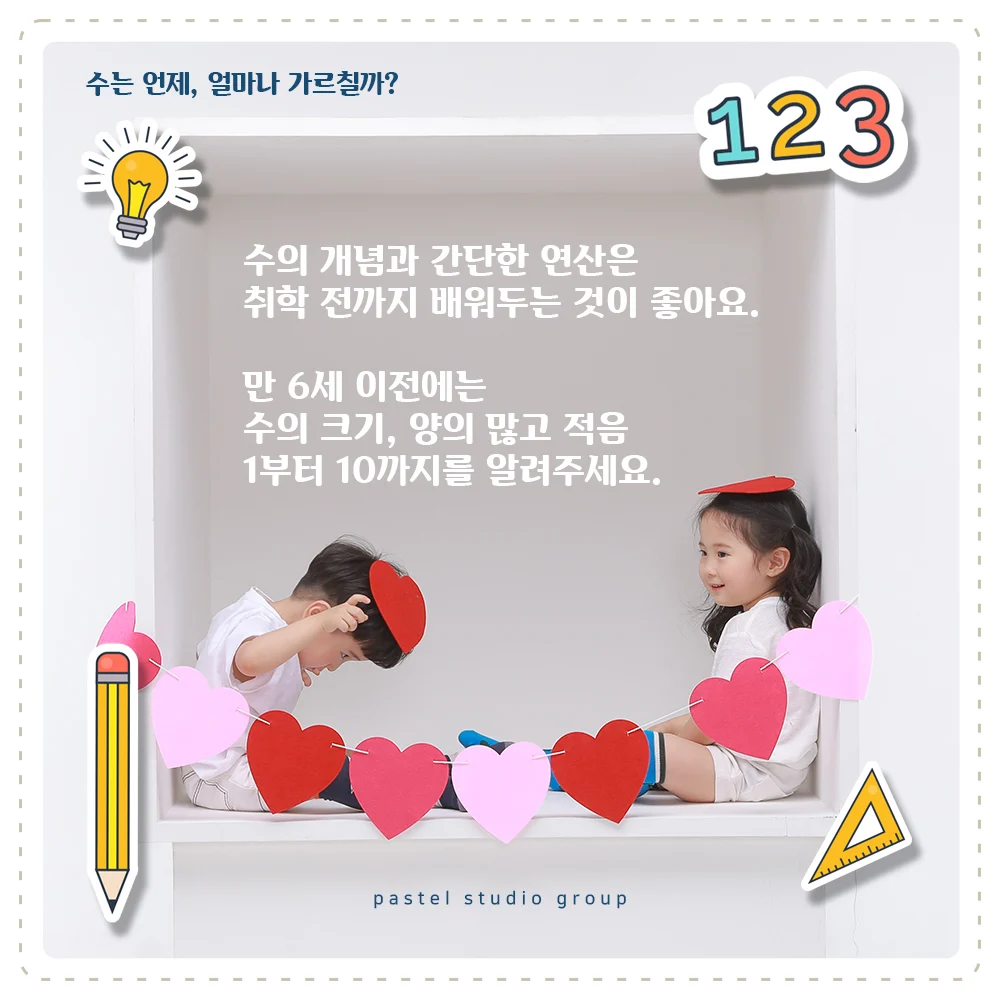
2. Before Age 6, Learn Numbers 1 to 10 and the Concept of Quantity
For children under 6, instead of mechanically memorizing the numbers '1, 2, 3...', help them first understand the size and quantity concepts of 'more and less'. Simply counting numbers from 1 to 10 in daily life and comparing sizes is sufficient for foundational learning.
3. Learning Number Systems Through Play
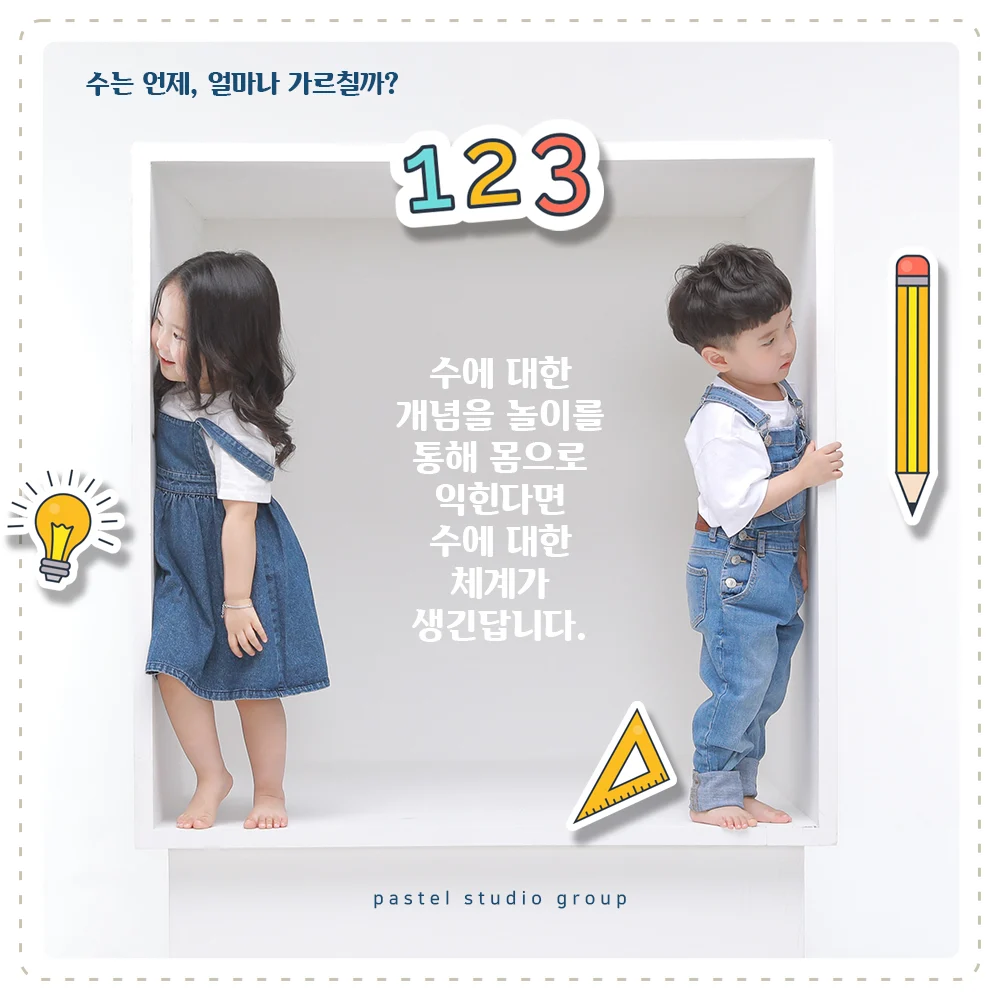
The best way to study math in early childhood is through 'play'. Activities like stacking blocks, climbing stairs, counting toys, and sharing snacks can help children learn number concepts through direct experience. The sensory understanding gained through play will create a solid number system in the child's mind.
Checklist
- Focus on establishing basic number concepts before school rather than forcing complex operations.
- Practice counting from 1 to 10 in daily life for children under 6.
- Help children understand concepts of size and quantity, such as big/small and many/few, first.
- Approach learning through fun activities using toys and snacks rather than studying at a desk.
- Praise children enthusiastically when they show interest in numbers in daily life to build their confidence.
Frequently asked questions
Is it okay if my child writes numbers backward or gets confused?
Yes, during early childhood, children are developing their visual perception and may confuse left and right, leading to writing numbers backward. This is a natural developmental process, so instead of scolding them for mistakes, kindly show them the correct shapes repeatedly and correct them playfully.
When is it best to start teaching operations (addition and subtraction)?
It’s best to start after the child has fully understood the concepts of quantity and size from 1 to 10. Use concrete objects (like candies or blocks) to naturally guide them in everyday conversations, such as asking, 'If I give you one more, how many will you have?' or 'If you eat one, how many will be left?'.