Brain Development by Age: 13-18 Months, What Play is Best?
This section introduces the sensory, cognitive, emotional, social, and language development characteristics of babies aged 13 to 18 months. During this period, children develop a sense of self, show stubbornness, and enjoy imitative play by following their parents. Baby Pastel provides tailored play methods and developmental points to stimulate your child's brain.
Last updated June 25, 2026

Guide content
Brain Development Activities by Age VOL.4: 13-18 Months, What Kind of Play is Good?
As your child begins to walk and becomes more active between 13-18 months, their curiosity and assertiveness grow! Baby Pastel provides guidance on appropriate brain development points and play methods for this age.
1. Sensory and Cognitive Development
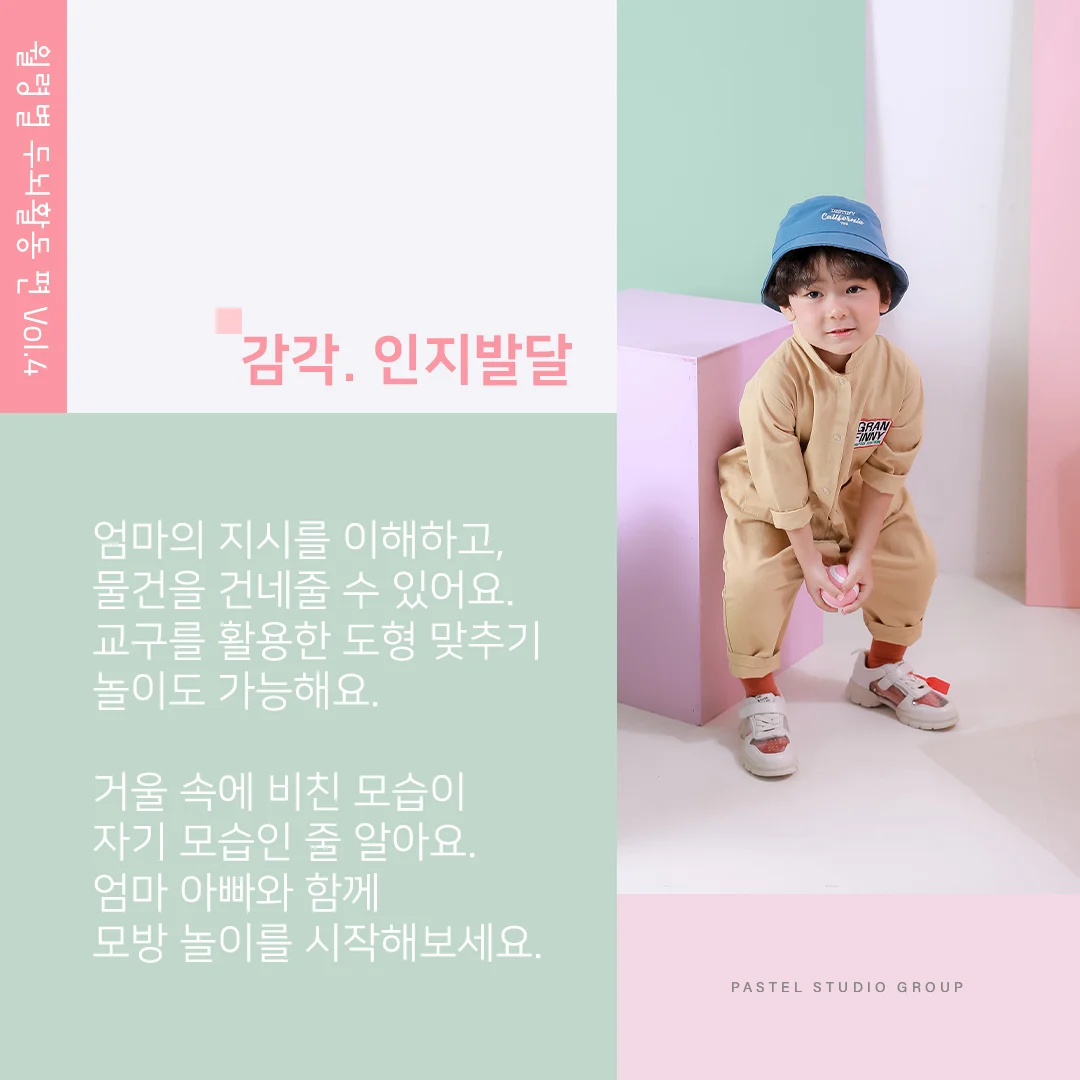
Your child's cognitive abilities develop to the point where they can understand instructions from mom and hand over the right objects. They can also engage in shape-matching games using educational toys. This is a great time to start 'imitation play,' where parents can show various actions for the child to mimic, as they begin to recognize their reflection in the mirror as themselves.
2. Emotional and Social Development
As their self-concept becomes clearer, children may start to show stubbornness. They may feel jealousy as they want to monopolize their parents' attention, and by around 18 months, you may observe them hiding negative emotions like anger or sadness.
3. Language Development
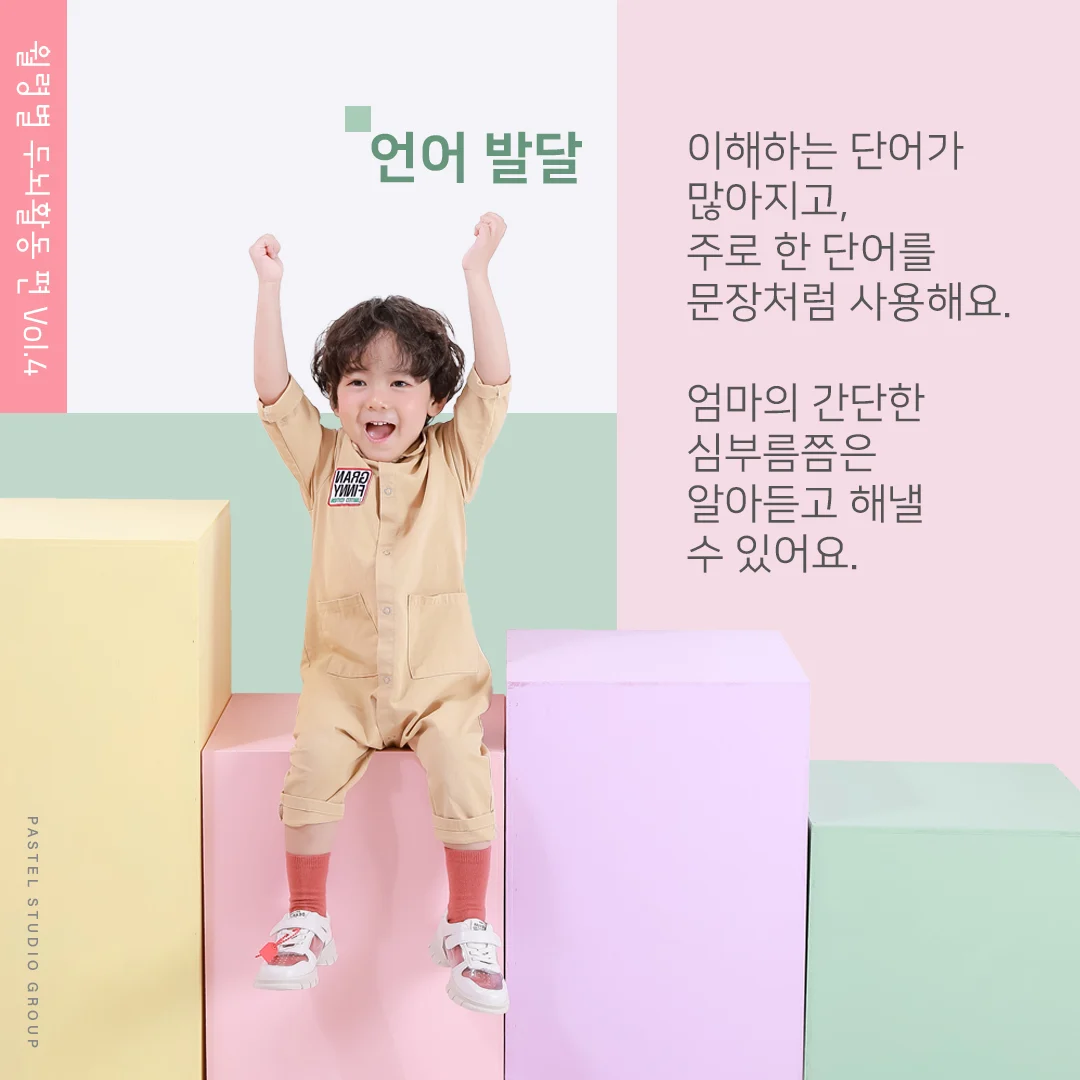
The number of words your child can understand increases rapidly. They primarily use single words but can convey the meaning of entire sentences with just one word. They can easily understand and carry out simple tasks from mom in daily life.
[Custom Play Tips for Your Child!]
Try simple tasks like "Please bring the diaper" or "Please bring the milk bottle" that provide a sense of achievement, engage in shape-matching games with educational toys, and gradually increase interactive play like imitation games with your child.
*For premature babies, developmental checks should be based on the due date, referred to as 'Corrected Age,' rather than the actual birth date.
Checklist
- Check if the child clearly understands and performs simple tasks ("Please bring the item")
- Engage in educational toy play that develops hand-eye coordination, such as shape matching
- Frequently do mirror play or 'imitation play' where the child mimics parents' expressions and actions
- Understand the child's self-development process as they become more stubborn and jealous, and respond positively
- As the child's understanding of words increases, provide clear and diverse vocabulary.
Frequently asked questions
What should I do if my child suddenly becomes stubborn and irritable?
Between 13-18 months, children develop a sense of self and a strong desire for independence, often saying 'I want to do it.' This is a very natural developmental process, so instead of scolding, it's better to empathize with your child's feelings first and give them many opportunities to choose and act within safe limits.
How does imitation play help brain development?
Imitation play, where children mimic parents' actions or expressions, lays the foundation for social development by observing and understanding others' perspectives. Additionally, the process of remembering and recreating actions greatly enhances memory and cognitive abilities, so enjoy various imitation games in daily life, such as clapping, cheering, or pretending to clean up.