Brain Development by Age: Ages 3-4 "No, I want to do it! Why? Why? Why?"
This section introduces the sensory, cognitive, emotional, and language development characteristics of children aged 3-4. During this period, their curiosity explodes, leading to constant questions of "why?" and a strong sense of self-assertion and possessiveness. Baby Pastel provides guidance on proper parenting and communication methods for these children.
Last updated June 25, 2026

Guide content
Brain Development by Age VOL.7: Ages 3-4, "No! I want to do it! Why? Why? Why?"
At ages 3-4, our children often express their strong sense of self with phrases like "No!" and "I want to do it!" Baby Pastel provides insights into key brain development points and communication tips during this curious and assertive stage.
1. Sensory and Cognitive Development
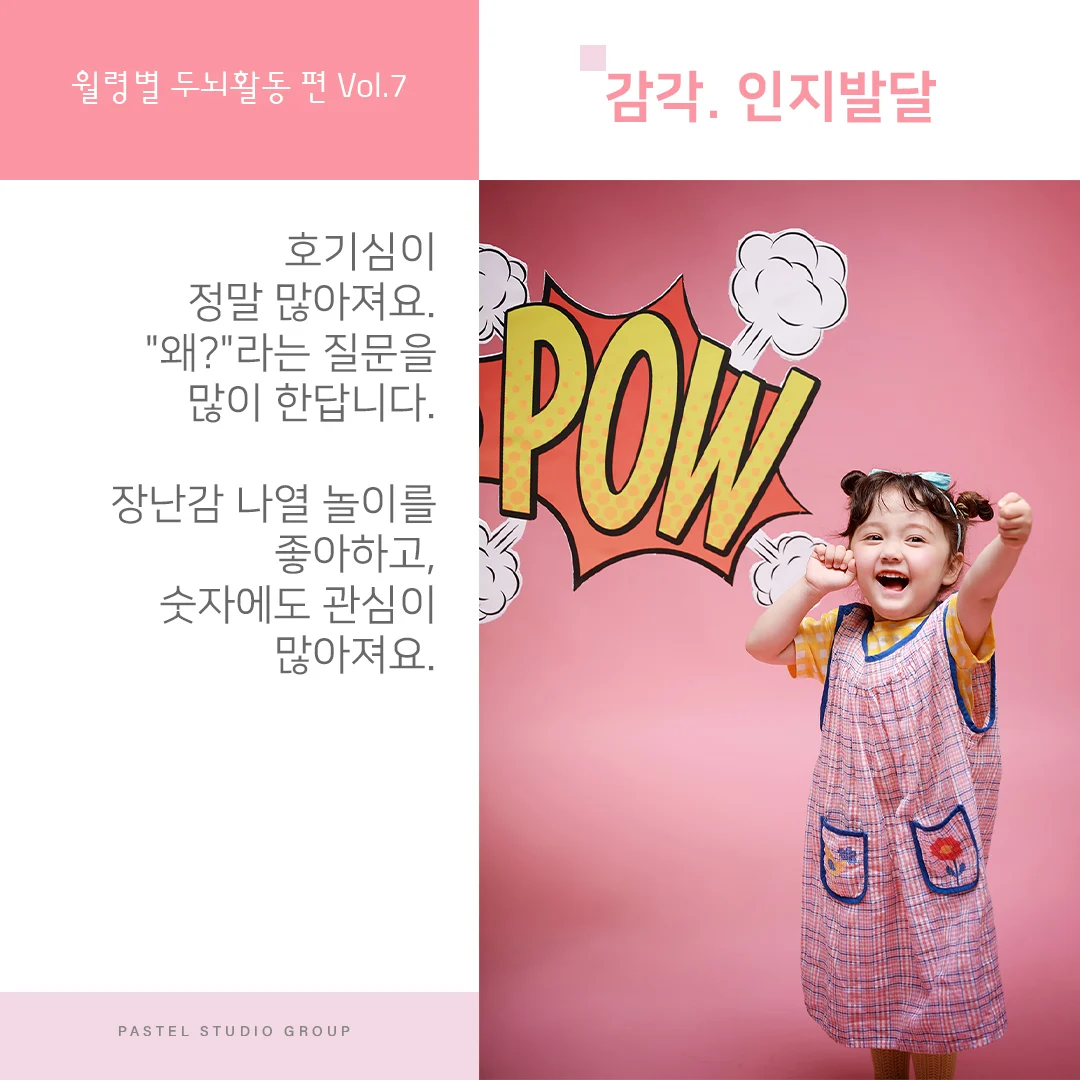
Children's curiosity about the world increases significantly, leading to endless questions of "Why?" They enjoy activities like lining up toys and show a growing interest in numbers.
2. Emotional and Social Development
While it may seem like they are playing with peers, they often prefer to sit side by side and play independently. They can express anger easily and show jealousy towards peers, frequently using the word "No" to assert their refusals.
3. Language Development
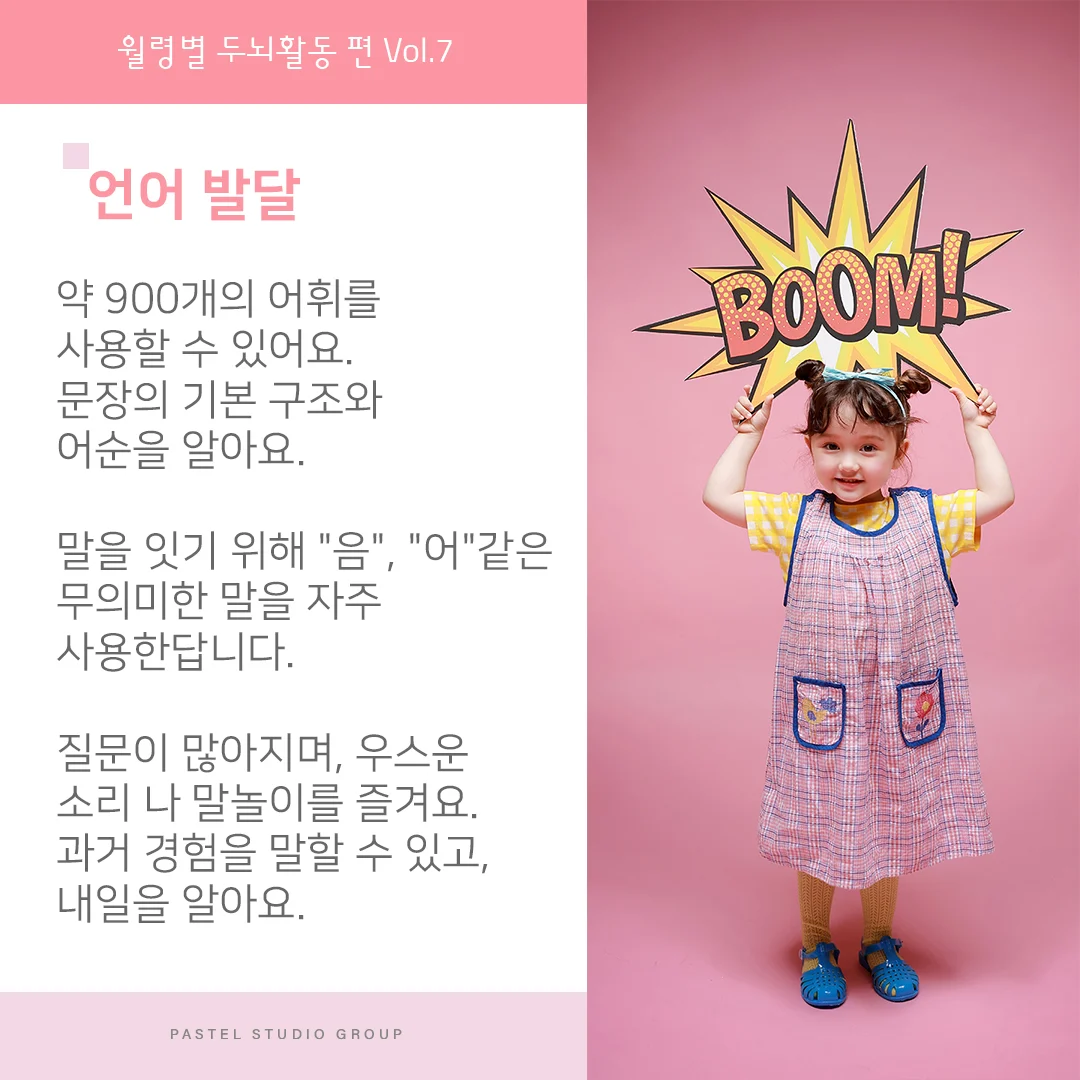
By this age, children can use over 900 words and understand basic sentence structures and word order. They often use filler words like "um" and "uh" to connect their thoughts. Their questioning increases, and they enjoy playful language and silly sounds, as well as sharing past experiences and understanding the concept of 'tomorrow'.
[Personalized Communication Tips for Your Child!]
Listen attentively to your child's stories. This is a time when they develop their own thoughts and desires. Since their ability to delay gratification is still developing, it's better to find small alternatives that can be done right now rather than postponing things indefinitely.
Checklist
- Respond kindly to endless questions of "Why?" without getting annoyed.
- Provide a play environment tailored to the child's interests, such as lining up toys and number games.
- When the child argues or feels jealous of peers, first empathize with their feelings and teach them proper emotional expression.
- When they hesitate with filler words like "um" or "uh" while trying to speak in longer sentences, do not rush them and listen until the end.
- Instead of postponing with "later," find alternatives that can satisfy the child in the current situation.
Frequently asked questions
My child prefers to play alone even when with peers. Does this mean they lack social skills?
This is a common stage of 'parallel play' seen in 3-4 year olds. Even when in the same space, they tend to focus on their own play rather than interacting with others, so there’s no need to worry too much. As they grow, they will naturally progress to 'cooperative play' where they share toys and play together.
My child insists on doing everything themselves and doesn’t listen when I say "later." How should I handle this?
Their strong sense of self has developed, but their ability to delay gratification is still immature. Allow them opportunities to try things safely, and be firm yet gentle in explaining why some things cannot be done. When waiting is necessary, promise them a short time frame they can understand and stick to it to gradually build their ability to delay gratification.